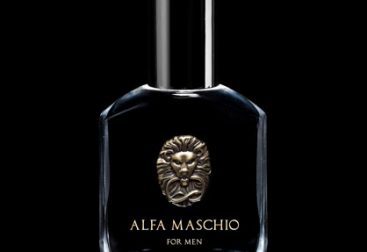
Pheromones are are excreted by animals on skin, hair, and saliva (sweat and bodily fluids). For humans, they are found on our skin and are excreted through our pores (and most abundantly in the armpits, or the axillary region).
Part of our ancient programming likely involves pheromones – from hunting prey, choosing suitable mates, detecting scents of animals, and the “6th sense” we have for survival.
Sure we drive cars, wear nice clothes, and live by a completely different set of rules in the modern world.
But at the core of it, we are still driven by our instincts.
Our drives to survive, reproduce, and carry our genes to the next generation.
After pheromones are excreted, they can become airborne, and be detected by other humans.
We’ll get into the science in just a moment – but first, here’s a quick outtake on the role pheromone colognes and perfumes can play:
With all this sciencey stuff, it’s easy to get lost in complicated words and scientific drivel that has no real meaning to you.
The long and short of it is this:
Pheromones very likely do influence some behaviors, but they cannot make anyone do anything they don’t want to do.
Sure, it can be fun to note the differences in how much someone likes you with different products, or with/without them…
… but their influence is powerful, yet limited.
Some have been tested thoroughly by online experts such as House Of Pheromones, and others are still on the testing phase to see if they have effects or not.
Pheromones can change others behavior in some very obvious ways. And the more we research about them, the more amazing it really is…
And for the super nerds out there, here is a more scientific explanation.
The VNO – or vomeronasal organ – is thought to be the main driver behind the effects pheromones can play in our interactions with other humans.
However…
There is still a lot of debate about the functioning of the “vomeronasal organ”, which is the core of disagreement about the existence of human pheromones.
The debate stems from the human version of the VNO, appearing vastly different from those found in other mammals, as well as non-mammalian species.
It also appears that the structure of the VNO (if it functions), is used only intermittently (as an “accessory” to the main olfactory system, which picks up scent).
One other reason that scientists continue to ask “what are pheromones?”, is that the VNO also seems to have no nerves connected to it.
This is why it is difficult to conclusively say whether it is due to actually being picked up by the VNO – OR, whether it is another mechanism responsible for the effects that are noted when exposing subjects to them.
Here are studies which attempt to explain, as well as prove/disprove the vomeronasal organ (VNO):
- Human Vomeronasal Organ Function: Critical Analysis
- Structure and Function of the Vomeronasal Organ
- VNO Is Not Involved In Perception of Endogenous Odors
- Pheromones and other Chemical Communication in Animals
- The Vomeronasal Cavity In Adult Humans
This particular area of science is still relatively new, and is not well understood just yet – there are a lot of factors to consider.
However, what we do know is that they are a part of what makes us human, and it also proves that we’re more tied to the animal kingdom than we normally care to think about.
Here are links to various studies, articles, and journals that are both for, and against the idea of human pheromones:
Articles, journals, and studies (PDF format)
- Pheromones and their Roles (PDF)
- 50 Years Of Pheromones: Brief History & Summary of Research (PDF)
- Pheromones and Reproduction: Do They Have a Role In Humans (PDF)
- Human Pheromones (Effects on Reproduction) (PDF)
- Are Mammal Olfactory Signals Hiding Right Under Our Noses? (PDF)
- Facts, Fallacies, Fears, and Frustrations With Human Pheromones (PDF)
- Androstadienone’s Influence On Facial/Vocal Attractiveness (PDF)
- Effects Of Pheromones On Perception Of Male Attractiveness (PDF)
- Variability In The Odorant Receptor And Effects Pheromone Perception (PDF)
- MHC-correlated odour preferences in humans (PDF)
Studies, journals, and articles (abstracts only)
- Human Pheromones: Have They Been Demonstrated? (abstract)
- Chemosignal Androstadienone Makes Women More Generous (abstract)
- The Influence Of Androstenol On Mood Throughout Menstrual Cycle (abstract)
- Differences in Response to the Odor of Alpha Androstenone (abstract)
- The Scent Of Fear (abstract)
- Rapid Mood Change And Human Odors (abstract)
- Human Olfactory Communication Of Emotion (abstract)
- Psychological Mood Effects of Chemosignals in Men & Women (abstract)
- Scent of Symmetry: Human Pheromone that Signals Fitness? (abstract)
Articles, journals, and studies (cited)
- Study Shows Some Male Pheromones Can Increase Cooperativeness
- Pheromones and Their Effect on Women’s Mood
- Information About Mammalian Pheromones And Their Possible Uses
- Behavioral & Physiological Changes When Exposed To 4,16-Androstadien-3-one
- Facts, Fallacies, Fears, and Frustrations With Human Pheromones
- Pheromones, Vomeronasal Function, and Gender Specific Behavior
Note: Effects and studies of specific human pheromones, and other chemo-signals, scents, and odors that appear to affect humans is available here:
https://houseofpheromones.com/human-pheromone-effects-molecules/
Assuming the vomeronasal organ is functional, pheromones are capable of affecting our social and reproductive behaviors.
Considering that there is limited information on the functioning of the vomeronasal organ, and how exactly it perceives these special scents, this is still under investigation.
However, it should be noted that “odor” is still highly distinctive for every individual – and there is a strong correlation of partners choosing the most unique genetic system to produce the most healthy offspring.

News for pheromone addicts
Learn more about how pheromones affect our brains and bodies, and how we can use the power of fragrance to improve our daily lives. You'll also get access to the "Secrets Of Personal Magnetism" report, and uncover loads of tips & tricks to improving your social, romantic, and professional life.